
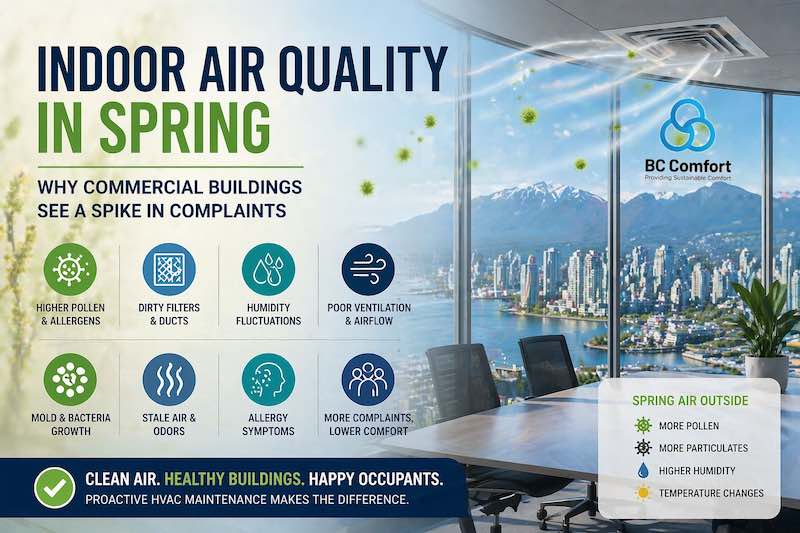
As winter ends and temperatures rise across British Columbia, particularly in Greater Vancouver and the Fraser Valley, many commercial buildings experience a noticeable increase in indoor air quality complaints. Occupants report stuffy air, odours, allergy symptoms, headaches, and inconsistent airflow. These issues are not random. They are directly tied to seasonal changes and how HVAC systems transition from heating to cooling.
Understanding why indoor air quality declines in spring allows building owners and facility managers to take proactive steps that improve comfort, reduce complaints, and maintain system efficiency.
Why indoor air quality gets worse in spring
Spring introduces environmental and operational changes that affect indoor air quality. Outdoor air contains higher levels of pollen and airborne particles, humidity begins to rise, and HVAC systems switch into cooling mode. These shifts expose underlying issues such as poor filtration, ventilation imbalance, and overdue maintenance that may not have been noticeable during winter.
Buildings that remained closed during colder months often struggle when ventilation increases, leading to airflow inconsistencies and air quality concerns.
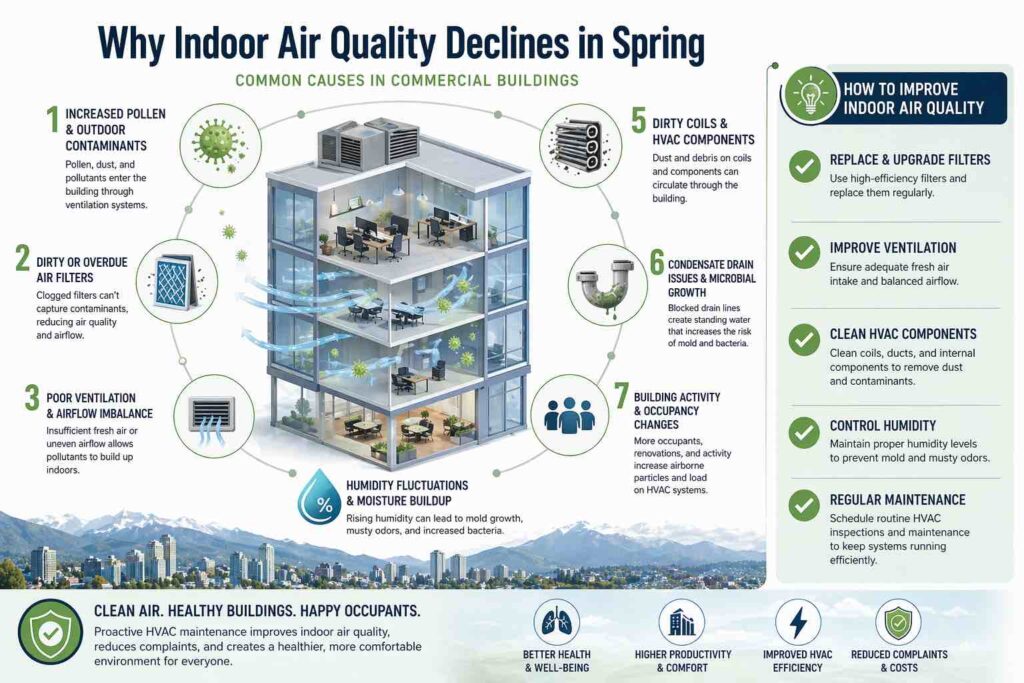
1. Increased pollen and outdoor contaminants
Spring air carries pollen, dust, and other airborne particles into commercial buildings. Without proper filtration, these contaminants circulate indoors and trigger allergy symptoms and discomfort.
Indoor air quality declines in spring because outdoor allergens like pollen enter buildings through ventilation systems and are not effectively filtered.
Upgrading filters and ensuring proper installation helps capture these particles before they spread.
2. Dirty or overdue air filters
Air filters that worked heavily during winter often reach spring in a clogged state. When filters are dirty, they fail to capture contaminants and restrict airflow.
This results in reduced indoor air quality, higher energy consumption, and increased strain on HVAC systems.
3. Poor ventilation and airflow imbalance
Balanced ventilation is essential for maintaining healthy indoor air. During seasonal transition, systems are often not properly adjusted, leading to insufficient fresh air or uneven airflow across zones.
Poor ventilation reduces indoor air quality by limiting fresh air intake and allowing pollutants to build up inside the building.
Proper airflow balancing and ventilation adjustments are critical during spring startup.
4. Humidity fluctuations and moisture buildup
Spring brings rising humidity levels, which can create conditions for mold growth and musty odors if not properly controlled. HVAC systems that are not calibrated for humidity may allow excess moisture to accumulate in ducts and indoor spaces.
This affects both comfort and long term air quality.
5. Dirty coils and HVAC components
Evaporator coils and internal HVAC components often collect dust and debris during winter operation. When the system switches to cooling, these contaminants can circulate throughout the building.
Cleaning these components improves both efficiency and indoor air quality.
6. Condensate drain issues and microbial growth
Cooling systems produce condensation, and blocked drain lines can lead to standing water. This creates an environment for bacteria and mold growth within the system.
Standing water in HVAC systems promotes mould and bacteria growth, which negatively impacts indoor air quality.
Regular maintenance helps prevent these issues.
7. Building occupancy changes and activity levels
Spring often brings increased activity, occupancy changes, or renovations in commercial buildings. More people and movement generate additional airborne particles and place higher demand on HVAC systems.
Without proper ventilation and filtration, air quality declines quickly.
How to improve indoor air quality in commercial buildings
Improving indoor air quality requires a proactive approach. Replacing and upgrading air filters, cleaning coils and internal components, balancing airflow, increasing ventilation where needed, and maintaining proper humidity levels are essential steps. Monitoring systems such as building automation controls can also help track air quality and adjust performance in real time. Regular commercial HVAC maintenance plays a key role in keeping systems operating efficiently and preventing seasonal issues.
Why indoor air quality matters for commercial buildings
Poor indoor air quality affects occupant comfort, productivity, and overall satisfaction. It often leads to increased complaints from tenants and employees, which can impact building operations and reputation. Maintaining good air quality supports a healthier indoor environment and improves HVAC system performance over time.
Indoor air quality complaints increase in spring due to higher levels of outdoor allergens, rising humidity, dirty HVAC components, and ventilation issues during the transition from heating to cooling.
Commercial buildings can improve indoor air quality by replacing filters, increasing ventilation, cleaning HVAC components, controlling humidity, and maintaining balanced airflow.
Common signs include stale air, odors, allergy symptoms, uneven temperatures, increased dust, and frequent occupant complaints.
Commercial HVAC systems should be inspected at least twice per year, with additional filter changes depending on building usage and conditions.
Service areas
Our team works with commercial buildings throughout Vancouver and the Lower Mainland, supporting property managers and business owners with reliable HVAC maintenance and indoor air quality solutions. We regularly provide service in Vancouver, Burnaby, Coquitlam, Surrey, Langley, Richmond, and surrounding areas. If your commercial property is nearby, our team can provide prompt inspections and tailored service to keep your building comfortable and efficient.
Final takeaway
Indoor air quality commercial buildings BC property managers address in spring has a direct impact on comfort, efficiency, and occupant satisfaction. Seasonal changes reveal hidden HVAC issues, making spring the ideal time to improve filtration, ventilation, and system performance. Proactive maintenance reduces complaints, lowers operating costs, and ensures a healthier indoor environment heading into the warmer months.