
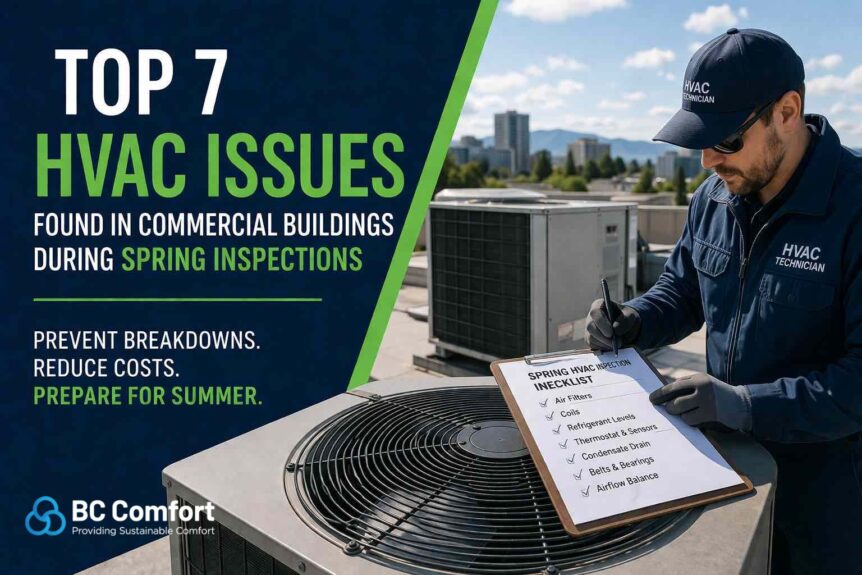
As winter ends in British Columbia and temperatures begin to rise, commercial HVAC systems enter a critical transition period. Spring is the most important time for a commercial HVAC spring inspection BC property owners and facility managers can schedule because issues left over from winter often become visible when systems switch from heating to cooling.
Regular spring inspections help prevent breakdowns, reduce energy costs, and improve indoor comfort across commercial buildings.
Our team works with commercial properties across Greater Vancouver and Lower Mainland, supporting building owners and facility managers with reliable HVAC maintenance and seasonal inspections. We regularly service businesses in Vancouver, Burnaby, Surrey, and Richmond, along with surrounding areas. If your property is located nearby, there is a strong chance we already support buildings in your area and can provide prompt, local service tailored to your system and usage needs.
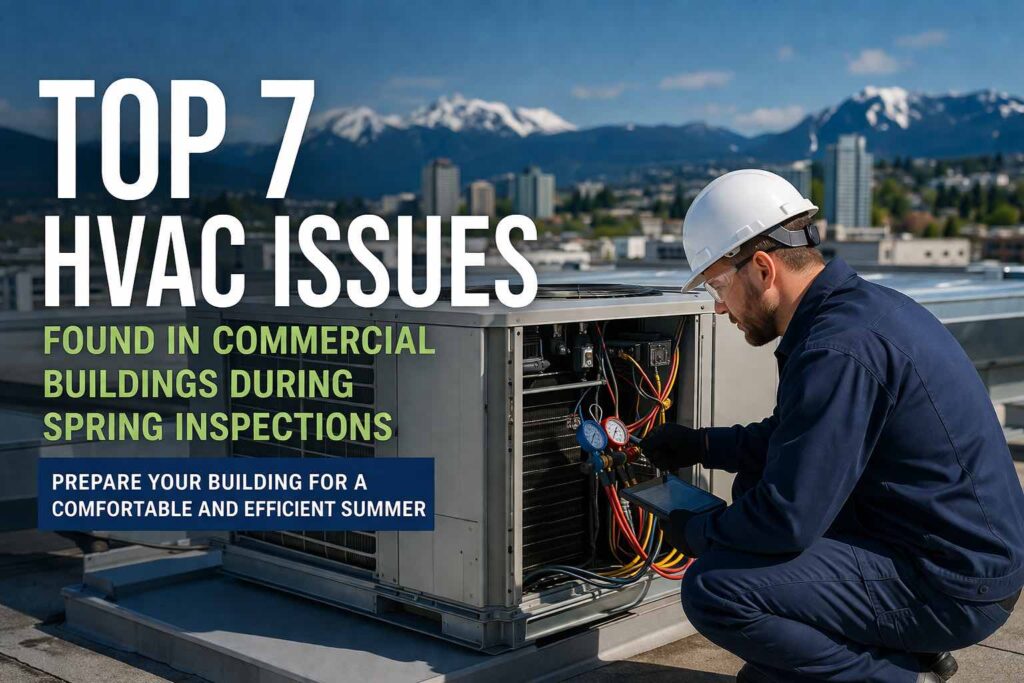
1. Dirty or clogged air filters
One of the most common issues found during spring inspections is restricted airflow caused by dirty air filters. Commercial systems run heavily during winter, which leads to dust and debris buildup. When filters are clogged, airflow is reduced, energy use increases, and indoor air quality declines. Replacing filters is one of the simplest and most effective maintenance steps.
2. Dirty condenser and evaporator coils
Coils often accumulate dirt during winter operation, especially in high-occupancy commercial buildings. When coils are dirty, heat transfer becomes inefficient, forcing the system to work harder to maintain cooling. This leads to higher energy consumption and increased wear on components.
3. Refrigerant level issues
Low or imbalanced refrigerant levels are frequently discovered during spring startup inspections. Small leaks can develop over time, leading to reduced cooling performance, longer run cycles, and potential compressor damage if not addressed. Proper refrigerant testing ensures the system operates efficiently before peak cooling season.
4. Thermostat and sensor calibration problems
Spring is when HVAC systems switch modes, making control issues more noticeable. If thermostats or building sensors are not properly calibrated, temperature inconsistencies can occur across different zones. This leads to occupant discomfort and unnecessary energy use. Calibration ensures accurate temperature control throughout the building.
5. Clogged or poorly draining condensate lines
As cooling demand increases in spring, condensate production also increases. If drain lines are blocked, water can back up into the system or surrounding areas, potentially causing leaks, mold growth, and equipment damage. Cleaning condensate lines is essential for safe system operation.
6. Worn belts, bearings, and mechanical components
After months of continuous winter operation, mechanical wear is common in commercial HVAC systems. Worn belts, failing bearings, and loose components can lead to vibration, noise, reduced efficiency, and eventual system failure if not replaced in time. Spring inspections help identify these issues early.
7. Poor airflow balance across zones
Many commercial buildings experience uneven heating or cooling after seasonal changeover. This is often caused by damper issues, blocked vents, or system imbalance. Poor airflow balance results in hot and cold spots, tenant complaints, and reduced system efficiency across the building.
Why spring HVAC inspections matter in BC commercial buildings
Spring in British Columbia brings fluctuating temperatures and increasing cooling demand. A commercial HVAC spring inspection BC service ensures systems are prepared for summer, improves energy efficiency, reduces emergency repair risk, and extends equipment lifespan. Preventative maintenance is significantly more cost-effective than reactive repairs during peak season.
If you manage a commercial building in BC, book your commercial HVAC spring inspection today to prevent breakdowns, reduce energy costs, and ensure reliable cooling performance before summer demand increases.
Schedule your HVAC maintenance service now with BC Comfort to keep your system efficient, compliant, and ready for peak season operation.
A spring inspection typically includes filter replacement, coil cleaning, refrigerant checks, thermostat calibration, condensate drain cleaning, and full system performance testing.
It ensures the system is ready for cooling season, improves efficiency, reduces operating costs, and prevents unexpected breakdowns during high demand periods.
Most commercial HVAC systems should be inspected twice a year, in spring and fall, to maintain optimal performance and reliability.
Common signs include uneven temperatures, higher energy bills, weak airflow, unusual noises, and water leaks.
Final takeaway
A commercial HVAC spring inspection BC property owners schedule early in the season helps prevent costly breakdowns and ensures reliable cooling performance throughout summer. Addressing small issues such as clogged filters, sensor drift, and worn components early leads to better efficiency, lower costs, and longer system lifespan.