
Introduction
Commercial HVAC systems are one of the largest operating expenses for businesses in Vancouver and the Lower Mainland. Rising utility costs, aging mechanical systems, stricter efficiency standards, and increasing occupant comfort expectations are forcing building owners and facility managers to rethink how their HVAC systems operate. Many businesses are asking the same question: should you retrofit your existing HVAC equipment or replace it entirely? The answer depends on system age, energy performance, repair frequency, building requirements, and long term operating costs. Understanding how to reduce commercial HVAC energy costs in Vancouver can help businesses improve building performance, reduce downtime, and protect long term asset value.
Why Commercial HVAC Energy Costs Are Rising in Vancouver
Energy costs across British Columbia continue to rise while commercial buildings are expected to deliver better ventilation, improved indoor air quality, and lower carbon emissions. Older HVAC systems often operate inefficiently because they were installed under outdated building standards and may lack modern controls or energy-saving technology. In many commercial properties across Metro Vancouver and the Fraser Valley, rooftop units, chillers, boilers, and ventilation systems have been operating for decades with declining efficiency. Aging equipment consumes more electricity and gas while requiring more frequent repairs and maintenance.
Signs Your Commercial HVAC System Is Costing Too Much
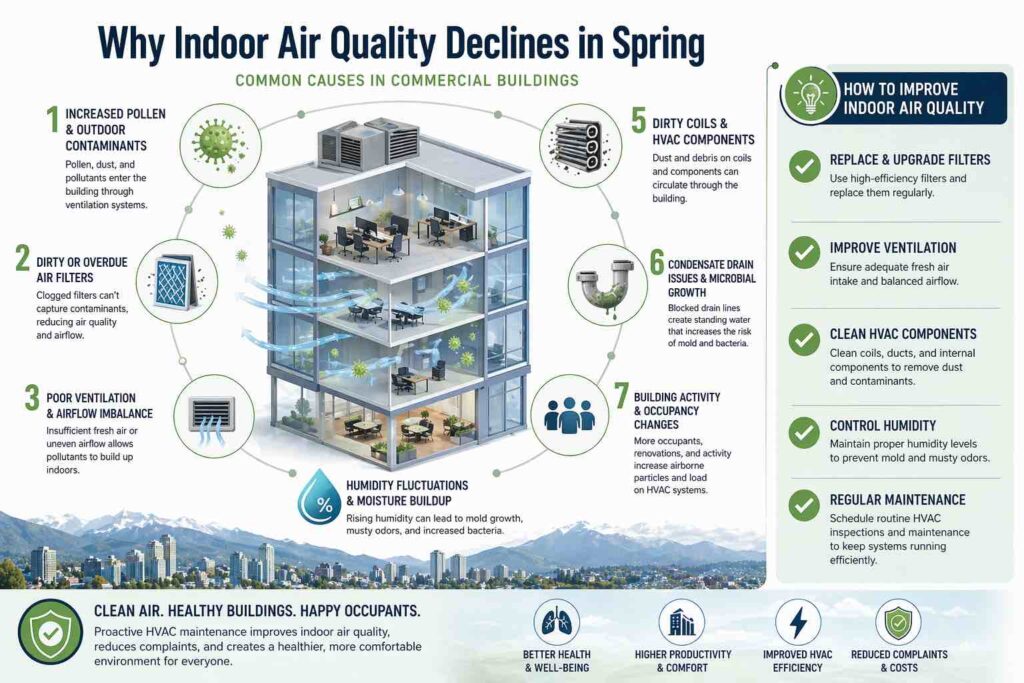
Many businesses continue repairing HVAC systems without realizing how much energy waste is affecting operational costs. Warning signs often include rising utility bills, inconsistent temperatures, occupant complaints, poor airflow, frequent breakdowns, and equipment struggling during seasonal demand changes. Indoor air quality complaints also tend to increase when systems are no longer operating efficiently. Dirty coils, outdated controls, poor ventilation balancing, and aging rooftop equipment all contribute to higher operating costs and lower building performance.
HVAC Retrofit vs Full Replacement
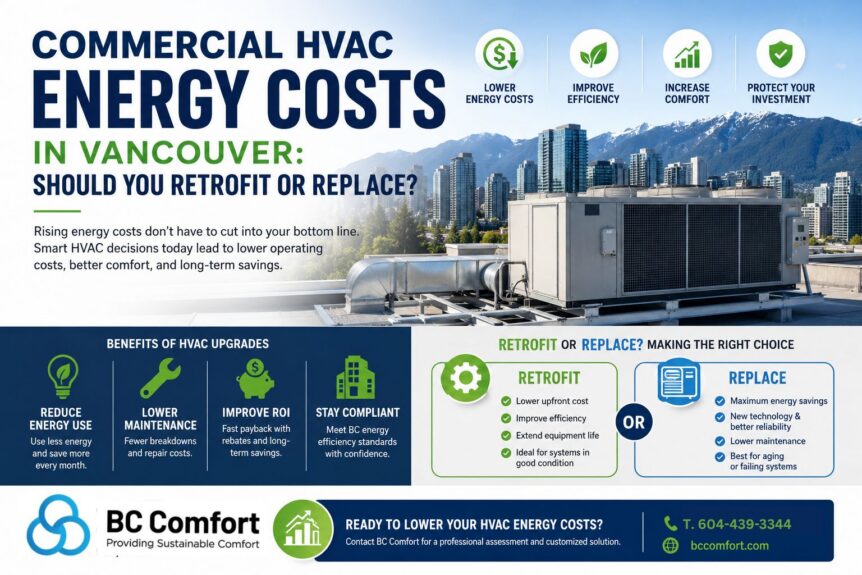
A commercial HVAC retrofit upgrades key components of an existing system without replacing the entire mechanical infrastructure. This may include installing variable frequency drives, upgrading controls, replacing rooftop units, improving ventilation systems, adding heat recovery systems, or integrating building automation technology. Retrofits are often ideal for buildings where core mechanical infrastructure remains viable but energy performance needs improvement.
A full HVAC replacement involves removing and replacing major equipment such as chillers, boilers, rooftop units, or central heating and cooling systems. Although replacement projects require higher upfront investment, they often provide greater long term energy savings, lower maintenance costs, improved reliability, and easier compliance with modern building standards.
The Financial Benefits of Energy Efficient HVAC Upgrades
Reducing commercial HVAC energy costs in Vancouver can significantly improve building operating budgets. Energy-efficient HVAC upgrades help businesses lower utility expenses, reduce emergency repair costs, improve occupant comfort, and extend equipment life. Modern HVAC systems with smart controls and automation also allow facility managers to monitor performance in real time and identify inefficiencies before they become major issues.
Commercial HVAC retrofits may also qualify for BC Hydro and FortisBC incentive programs that help offset upgrade costs. Many rebate programs support heat pumps, rooftop unit upgrades, building automation systems, demand-controlled ventilation, and high-efficiency mechanical equipment. Businesses that plan upgrades early may benefit from shorter payback periods and improved ROI.
Why Preventative Maintenance Still Matters
Even the most efficient HVAC equipment performs poorly without proper maintenance. Preventative maintenance helps reduce energy waste, identify failing components early, maintain airflow balance, improve indoor air quality, and prolong equipment lifespan. Regular inspections and servicing are especially important for commercial rooftop HVAC units, which are commonly overlooked until failure occurs. BC Hydro estimates that many rooftop HVAC systems operate inefficiently simply because maintenance and controls are neglected.
Building Automation and Smart HVAC Controls
Building automation systems are becoming increasingly important for commercial HVAC efficiency in Vancouver. Smart controls help facility managers optimize heating, cooling, ventilation, occupancy schedules, and energy usage across entire buildings. Automated systems can identify performance issues quickly, reduce unnecessary runtime, and improve comfort consistency throughout commercial spaces. Businesses investing in building automation often see substantial reductions in energy consumption and operational waste.
Why Vancouver Businesses Work with BC Comfort
For over 50 years, BC Comfort has provided commercial HVAC, mechanical, and building automation services throughout Vancouver and the Lower Mainland. BC Comfort supports commercial and industrial facilities with HVAC retrofits, preventative maintenance, building automation integration, energy-efficient upgrades, and full mechanical system replacements. Their experience across office buildings, warehouses, healthcare facilities, institutional buildings, and industrial properties helps businesses improve system reliability and reduce long term operational costs.
Commercial buildings can reduce HVAC energy costs through preventative maintenance, energy-efficient retrofits, building automation systems, upgraded rooftop units, and improved ventilation controls.
Commercial HVAC systems should be considered for replacement when they require frequent repairs, operate inefficiently, or no longer meet building comfort and ventilation requirements.
Yes. Commercial HVAC retrofits often reduce energy consumption, improve occupant comfort, lower maintenance costs, and extend the lifespan of existing systems.
Many HVAC upgrades in British Columbia qualify for BC Hydro and FortisBC incentive programs, especially projects involving energy-efficient equipment and automation upgrades.
Service areas
Our team works with commercial buildings throughout Vancouver and the Lower Mainland, supporting property managers and business owners with reliable HVAC maintenance and indoor air quality solutions. We regularly provide service in Vancouver, Burnaby, Coquitlam, Surrey, Langley, Richmond, and surrounding areas. If your commercial property is nearby, our team can provide prompt inspections and tailored service to keep your building comfortable and efficient.
Conclusion
Commercial HVAC energy costs in Vancouver are becoming a major concern for building owners and facility managers. Aging equipment, rising utility costs, and changing efficiency standards make proactive planning more important than ever. Whether your building requires a retrofit, smart controls, or full HVAC replacement, improving energy performance can reduce operating costs, increase reliability, and improve occupant comfort. Working with experienced commercial HVAC professionals helps businesses make informed decisions that support long term building performance and sustainability goals.