
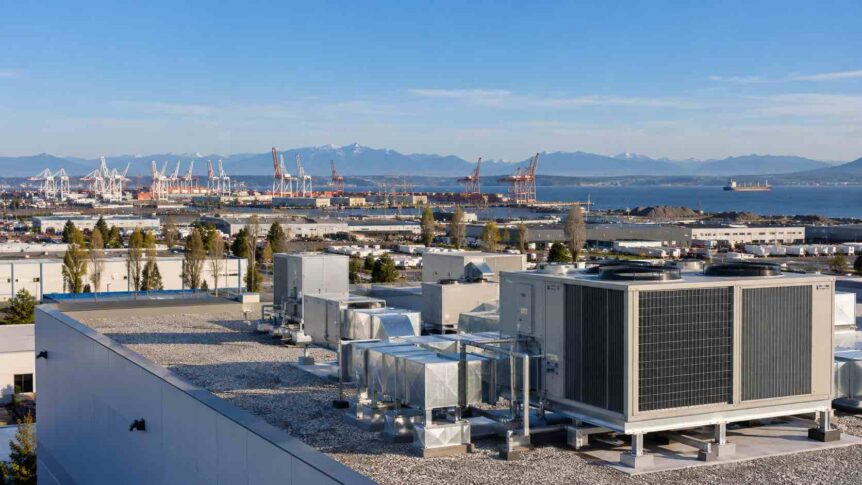
A commercial HVAC system can be operational without performing as intended. Equipment may start and stop correctly, yet heating and cooling can remain inconsistent, controls may not communicate properly, and operating schedules may fail to match actual building use.
Commercial HVAC commissioning helps identify these issues by checking whether building systems operate according to their design requirements and intended performance.
For property managers, facility managers and building owners across Metro Vancouver and the Fraser Valley, commissioning can provide valuable insight into system reliability, occupant comfort and long-term building performance.
Key Takeaway
Commercial HVAC commissioning verifies that heating, ventilation, air conditioning equipment and building controls operate as intended. Unlike routine maintenance, it evaluates overall system performance and identifies operational issues that may otherwise go unnoticed. For commercial building owners, commissioning can help improve reliability, resolve persistent comfort problems and support informed decisions about mechanical upgrades.
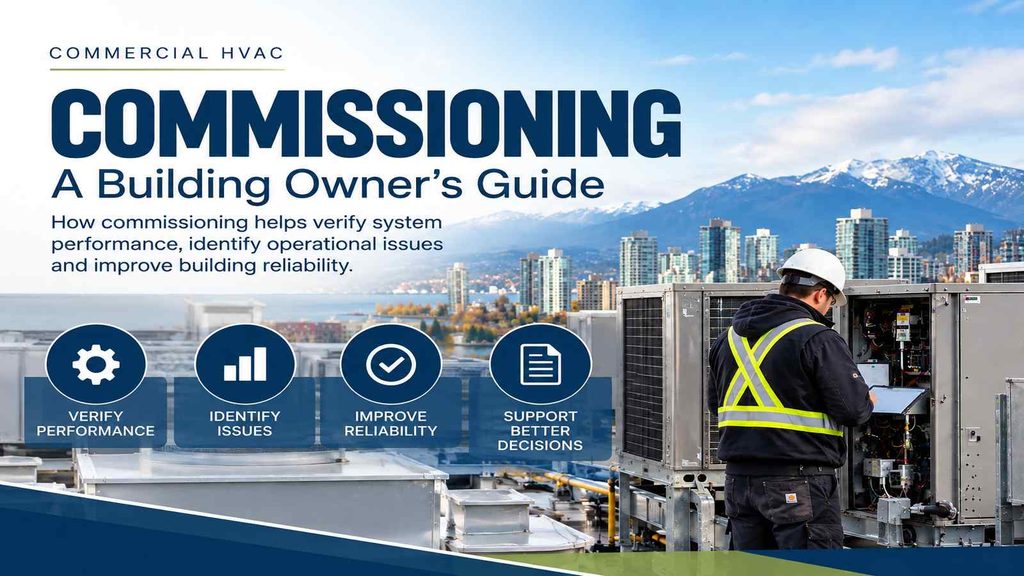
What Is Commercial HVAC Commissioning?
Commercial HVAC commissioning is a systematic process for verifying that heating, ventilation and air conditioning equipment operates as intended.
The process can involve reviewing system documentation, checking equipment operation, testing controls and confirming that connected components work together correctly.
Depending on the project, commissioning may take place during new construction, after an equipment replacement or following a major mechanical upgrade.
The goal is to identify deficiencies, confirm correct operation and document any issues that require attention.
Commissioning vs. Preventative HVAC Maintenance
Although commissioning and preventative maintenance both support reliable HVAC operation, they serve different purposes.
Preventative maintenance focuses on keeping equipment in good working condition. Typical tasks include cleaning components, inspecting belts, replacing filters and checking mechanical parts.
Commissioning focuses on verifying system operation against the intended design and control requirements.
For example, a rooftop unit may receive regular maintenance but still operate outside its intended schedule. Similarly, a building automation system may display temperatures correctly while failing to control equipment as intended.
Commissioning can help uncover these operational problems.
For existing buildings, recommissioning applies a similar approach to systems that have been in service for some time. It can help identify performance issues caused by changes in building use, control settings, equipment modifications or gradual operational drift.
Five Signs Your Commercial Building May Need Recommissioning
1. Heating and Cooling Are Inconsistent
Some areas may feel too warm while others remain uncomfortable. These differences can indicate problems with airflow, controls, equipment operation or system balance.
An assessment can help determine whether the issue comes from the equipment, distribution system or control settings.
2. Equipment Operates Outside Occupied Hours
Heating and cooling equipment should follow schedules appropriate for the building’s use. Incorrect time settings, overridden controls or poorly configured sequences can cause equipment to operate when it is not needed.
Reviewing schedules and control logic can help identify these problems.
3. Building Automation Controls Are Not Working Together
Commercial buildings may use multiple systems to manage heating, cooling, ventilation and other building functions.
If controls do not communicate properly, equipment may operate inefficiently or respond incorrectly to changing conditions. Testing system integration can reveal communication problems and incorrect control sequences.
4. Complaints Continue Despite Routine Maintenance
Repeated comfort complaints may persist even when equipment is serviced regularly.
In these cases, the issue may involve sensor accuracy, control settings, airflow distribution or how different components interact. Commissioning helps investigate system performance rather than focusing only on individual pieces of equipment.
5. The Building Has Changed Since the HVAC System Was Installed
Tenant improvements, changes in occupancy, renovated spaces and new equipment can affect heating, cooling and ventilation requirements.
A system that performed well under its original conditions may no longer suit the building’s current needs. Recommissioning can help determine whether the controls and equipment remain appropriate.
What Does the Commercial HVAC Commissioning Process Include?
The scope depends on the building, equipment and project requirements. Common activities include the following.
Review of Design and System Documentation
The commissioning team reviews available drawings, equipment schedules, control sequences and operating requirements. This establishes how the system is intended to function.
Equipment Inspection and Functional Testing
Selected equipment is inspected and tested to verify operation. Depending on the system, this may include rooftop units, boilers, pumps, ventilation equipment and associated controls.
Building Automation and Controls Verification
Control sequences, operating schedules, temperature sensors, setpoints and equipment responses may be checked against the intended requirements.
For integrated systems, testing can also help determine whether connected components communicate and respond correctly.
Identification and Resolution of Deficiencies
Any discrepancies identified during testing are documented for investigation and correction. Depending on the findings, adjustments, repairs, control changes or further technical work may be necessary.
Documentation and Follow-Up
Commissioning records help building owners understand what was tested, which deficiencies were found and what corrective actions remain outstanding.
Clear documentation also provides a useful reference for future maintenance, upgrades and operational decisions.
When Should a Building Owner Consider Commissioning?
Commissioning may be appropriate at several stages in a commercial building’s life.
- New construction: Verify that installed mechanical systems operate according to the project requirements.
- HVAC equipment replacement: Confirm that new equipment and associated controls function correctly within the existing building.
- Major renovations: Check system performance after changes to occupancy, space layout or mechanical infrastructure.
- Building automation upgrades: Verify control sequences and integration after changes to control systems.
- Persistent operational issues: Investigate recurring problems that routine maintenance has not resolved.
For existing buildings, recommissioning may also be worth considering when energy use, occupant comfort or equipment operation changes without an obvious explanation.
Not every building requires a comprehensive commissioning project. The appropriate scope depends on the building’s complexity, system condition, operational history and project objectives.
How Commissioning Supports Long-Term Building Performance
Commissioning can help building owners make better-informed decisions about their mechanical systems.
First, it can identify issues that routine servicing may not reveal. Correcting these problems may improve comfort and reduce unnecessary equipment operation.
Second, it can support more reliable building automation. Verified control sequences help equipment respond appropriately to occupancy, temperature requirements and operating schedules.
Finally, commissioning documentation can help facility managers prioritize corrective work and plan future upgrades. This is particularly valuable when managing multiple systems or commercial properties.
However, commissioning does not guarantee a specific reduction in energy costs or prevent every equipment failure. Results depend on the issues identified, the corrective actions completed and the condition of the overall system.
Commercial HVAC Commissioning in Metro Vancouver and the Fraser Valley
Commercial buildings rely on properly coordinated mechanical systems to support daily operations. When equipment, controls and ventilation systems do not work together as intended, the effects can include inconsistent comfort, operational disruption and avoidable energy use.
BC Comfort provides commercial HVAC services, building automation and mechanical building solutions for facilities across Metro Vancouver and the Fraser Valley. Its project experience includes mechanical equipment installation, system integration and commissioning.
Whether you are planning a mechanical upgrade or investigating persistent HVAC performance issues, a professional assessment can help determine the appropriate next steps.
Explore BC Comfort’s commercial HVAC services or learn more about its building automation and controls.
Contact BC Comfort to discuss your building’s mechanical system requirements and determine whether commissioning or further investigation is appropriate.
Frequently Asked Questions About Commercial HVAC Commissioning
What is the purpose of commercial HVAC commissioning?
The purpose is to verify that HVAC equipment and controls operate according to the intended design and performance requirements. Testing can identify deficiencies that affect comfort, reliability and system operation.
What is the difference between commissioning and recommissioning?
Commissioning commonly takes place during new construction or a major installation. Recommissioning evaluates an existing system to verify its operation and identify issues that may have developed over time or after changes to the building.
When should commercial HVAC commissioning be performed?
Commissioning is commonly performed during new construction, after major HVAC installations or upgrades, and when project requirements call for functional testing. Recommissioning may be appropriate when building use changes or recurring performance issues arise.
Does HVAC commissioning reduce energy costs?
Commissioning may identify unnecessary equipment operation, incorrect schedules or control problems that contribute to energy waste. Potential savings depend on the deficiencies found and whether corrective actions improve actual system performance.
Is commissioning the same as preventative maintenance?
No. Preventative maintenance focuses on servicing equipment to maintain its condition. Commissioning verifies that equipment, controls and connected systems operate as intended. The two activities can complement each other.
Can an existing commercial building benefit from recommissioning?
Yes. Existing buildings may benefit when comfort problems persist, controls have been modified, occupancy changes or mechanical upgrades affect system operation. An initial assessment can help determine whether recommissioning is warranted.