
Commercial make-up air systems play an important role in maintaining proper ventilation, building pressure and indoor comfort in commercial facilities. During winter, these systems must replace exhausted indoor air while providing adequate heating to prevent cold drafts, uneven temperatures and unnecessary heating demand.
During winter, an improperly functioning make-up air unit can contribute to cold drafts, uncomfortable working conditions, excessive heating demand and ventilation problems. Manufacturing facilities, warehouses, commercial kitchens and industrial buildings depend on properly coordinated make-up air and exhaust systems to maintain suitable indoor conditions.
BC Comfort provides commercial and industrial HVAC services, including ventilation equipment installation, system replacement, mechanical integration and commissioning across Metro Vancouver and the Fraser Valley.
Key Takeaways
- Make-up air replaces exhausted indoor air. Commercial buildings need properly designed ventilation to maintain balanced airflow and building pressure.
- Winter performance matters. Inadequate heating or airflow can contribute to cold drafts, uneven temperatures and increased heating demand.
- Building pressure affects comfort and operations. Poorly balanced ventilation can create negative pressure and interfere with exhaust systems.
- Regular inspections help identify problems. Airflow, filters, dampers, heating components, fans and controls all need to work together.
- Proper installation and commissioning make a difference. Commercial make-up air systems must be matched to the building’s ventilation and heating requirements.
What Is a Commercial Make-Up Air System?
A commercial make-up air system introduces outdoor air into a building to replace air removed by exhaust fans, ventilation equipment and industrial processes.
Commercial exhaust systems remove stale air, heat, moisture, odours and airborne contaminants. Without an adequate replacement air supply, a building can develop negative pressure, drawing uncontrolled outdoor air through doors, windows and gaps in the building envelope.
A make-up air unit conditions incoming outdoor air before distributing it throughout the facility. Depending on the equipment and application, conditioning includes heating, cooling, filtration and humidity control.
The ASHRAE Handbook’s overview of makeup air units explains how these systems condition ventilation air and replace air exhausted from buildings.
Commercial make-up air systems commonly serve manufacturing plants, warehouses, restaurants, commercial kitchens, automotive facilities and industrial production spaces.
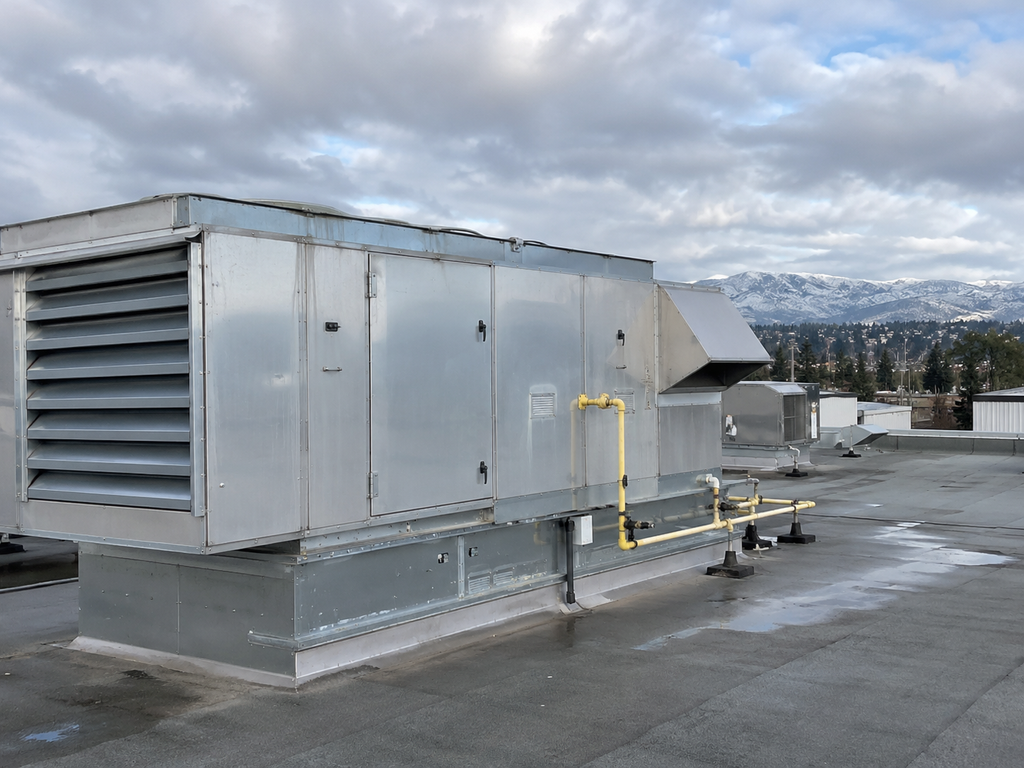
Why Make-Up Air Performance Matters During Winter
Cold outdoor temperatures increase the heating demand associated with incoming ventilation air. A properly sized and controlled make-up air system conditions replacement air while maintaining appropriate airflow throughout the building.
Several problems can develop when make-up air equipment fails to maintain the required airflow or temperature.
Negative Building Pressure Creates Cold Drafts
When exhaust equipment removes more air than the building replaces, negative pressure develops. Outdoor air enters through building openings, creating drafts near exterior doors, loading docks and windows.
Cold infiltration increases heating demand and makes indoor temperatures harder to maintain. Exterior doors may also become difficult to open, affecting employees, deliveries and daily building access.
Heating Systems Struggle to Maintain Indoor Temperatures
Commercial heating equipment must compensate for uncontrolled cold air entering the building. In facilities with large exhaust requirements, inadequate replacement air can create significant temperature differences between work areas and perimeter spaces.
Manufacturing facilities and warehouses with high ceilings, frequent door openings or large exhaust systems require particular attention to ventilation balance and heating capacity.
Exhaust Systems Lose Performance
Commercial exhaust fans depend on an adequate supply of replacement air. Negative building pressure increases resistance to airflow and can reduce exhaust performance.
In commercial kitchens and industrial production spaces, insufficient make-up air can affect ventilation effectiveness and the removal of heat, moisture, odours and airborne contaminants.
Uneven Air Distribution Affects Occupant Comfort
Poorly positioned supply outlets, incorrect airflow settings and unsuitable temperature controls can create uncomfortable drafts or uneven temperatures.
Make-up air distribution needs to account for building layout, exhaust locations, occupancy and the activities taking place inside the facility.
Signs Your Commercial Make-Up Air Unit Needs Attention
Facility managers and building owners should investigate recurring ventilation and pressure problems, particularly when outdoor temperatures drop.
Common warning signs include:
- Exterior doors becoming difficult to open or close.
- Cold drafts near entrances, loading docks and windows.
- Uneven temperatures between different areas of the building.
- Exhaust fans failing to maintain expected airflow.
- Heating equipment struggling to maintain indoor temperatures.
- Unusual noise, vibration or changes in make-up air unit performance.
- Persistent comfort complaints in production or work areas.
These symptoms can indicate an imbalance between supply and exhaust air, equipment deterioration, incorrect controls or insufficient heating capacity. A qualified HVAC technician can assess the ventilation system, measure airflow and identify the source of the problem.
What Should Be Checked on a Commercial Make-Up Air System?
Commercial make-up air equipment requires attention to airflow, heating performance, controls and the relationship between supply and exhaust systems.
A professional assessment should consider:
Airflow and building pressure
Measure supply and exhaust airflow to determine whether replacement air meets the building’s ventilation requirements. Evaluate building pressure and air distribution, including conditions near exterior doors and exhaust locations.
Heating performance
Check heating components, temperature controls and discharge air conditions. Verify that the unit supplies appropriately conditioned air under winter operating conditions.
Filters and dampers
Inspect filters, outdoor air dampers and associated components for restrictions, damage or incorrect positioning that affects airflow.
Fans and motors
Inspect fan assemblies, motors, belts and electrical components for wear, damage, vibration and abnormal operating conditions.
Controls and system integration
Review temperature settings, airflow controls, operating schedules and connections between make-up air equipment and exhaust fans. Incorrect control sequences can create imbalances even when individual components remain functional.
Air distribution
Evaluate supply outlet locations and airflow patterns to identify drafts, inadequate mixing and uneven temperature distribution.
The assessment should reflect the equipment design, building requirements and the type of exhaust activity taking place.
Commercial Make-Up Air Installation and Replacement
Commercial make-up air equipment must match the building’s ventilation requirements, exhaust capacity, heating demand and operating conditions.
An equipment replacement project requires more than selecting a unit with similar dimensions. Airflow capacity, heating output, electrical requirements, gas connections, controls and distribution arrangements all affect system performance.
BC Comfort has completed commercial and industrial make-up air projects involving rooftop equipment, exhaust systems, refrigeration piping, electrical connections, natural gas piping and control wiring.
For example, the Natural Factors project in Coquitlam involved replacing a rooftop make-up air unit with a 25,000 CFM system and 75 tons of cooling serving three floors of production space.
BC Comfort also completed a make-up air and exhaust installation for Amazon’s DVY7 facility in Langley. The project included 20,000 CFM make-up air units for production areas and 10,000 CFM exhaust fans for vehicle loading areas.
These projects illustrate the different ventilation requirements found in commercial and industrial facilities.
Why Commercial HVAC Commissioning Matters
Installation alone doesn’t confirm that a make-up air system performs according to its design requirements.
Commissioning verifies equipment operation, airflow, temperature performance, controls and coordination with connected exhaust systems.
A commissioning assessment can identify incorrect control sequences, inadequate airflow, equipment deficiencies and distribution problems. Correcting these issues supports the intended ventilation and building pressure requirements.
Commercial building owners should consider commissioning during new installations, equipment replacements and major mechanical upgrades.
Commercial Make-Up Air Services Across Metro Vancouver and the Fraser Valley
Commercial and industrial facilities depend on properly coordinated ventilation, heating and exhaust equipment to maintain suitable indoor conditions.
BC Comfort provides commercial HVAC installation, repair, replacement and maintenance services, including ventilation and make-up air systems. BC Comfort’s mechanical experience includes industrial production facilities, warehouses, commercial kitchens and multi-use buildings.
For property managers, facility managers and industrial operators experiencing ventilation problems, cold drafts or inadequate exhaust performance, a professional assessment can identify the equipment or airflow issues requiring attention.
Contact BC Comfort to discuss your commercial HVAC and ventilation requirements.
Frequently Asked Questions About Commercial Make-Up Air Systems
What does a commercial make-up air unit do?
A commercial make-up air unit replaces air removed by exhaust fans and ventilation equipment. The unit introduces outdoor air and conditions it through heating, cooling or filtration, depending on the building’s requirements.
Why is make-up air important in winter?
Make-up air replaces exhausted indoor air while helping maintain appropriate building pressure. Heating incoming outdoor air reduces cold infiltration, drafts and unnecessary heating demand associated with uncontrolled air entry.
What happens when a building doesn’t have enough make-up air?
Insufficient replacement air can create negative building pressure, difficult-to-open exterior doors, cold drafts, reduced exhaust airflow and uneven indoor temperatures.
How do I know if my commercial make-up air unit is failing?
Warning signs include inadequate airflow, inconsistent discharge temperatures, unusual equipment noise, cold drafts and recurring building pressure problems. An HVAC assessment can determine whether the issue involves equipment, controls or ventilation balance.
Do commercial make-up air units require heating?
Many commercial make-up air units heat incoming outdoor air to maintain suitable indoor conditions during cold weather. Heating requirements depend on the building, ventilation design and equipment application.
Can make-up air systems reduce commercial heating costs?
Properly designed and controlled make-up air systems can reduce uncontrolled infiltration and unnecessary heating demand. Actual energy performance depends on equipment efficiency, airflow requirements, controls and building conditions.
When should a commercial make-up air unit be replaced?
Replacement should be considered when equipment condition, repair requirements, inadequate capacity or persistent performance problems make continued operation unsuitable. A technical assessment can establish whether repair, upgrade or replacement is appropriate.
Need Help With Your Commercial Make-Up Air System?
A properly functioning make-up air system helps maintain balanced ventilation, building pressure and indoor comfort. If your commercial building is experiencing cold drafts, airflow problems or inconsistent heating, BC Comfort can help assess your HVAC system and recommend the right solution.
Contact BC Comfort to discuss your commercial ventilation needs and make-up air system services in Greater Vancouver and the Fraser Valley.